
Oregon’s Snowfall is Declining. What happens next?
This year’s snow season is already behind. Scientists and skiers weigh in on what this means for the Willamette Valley.


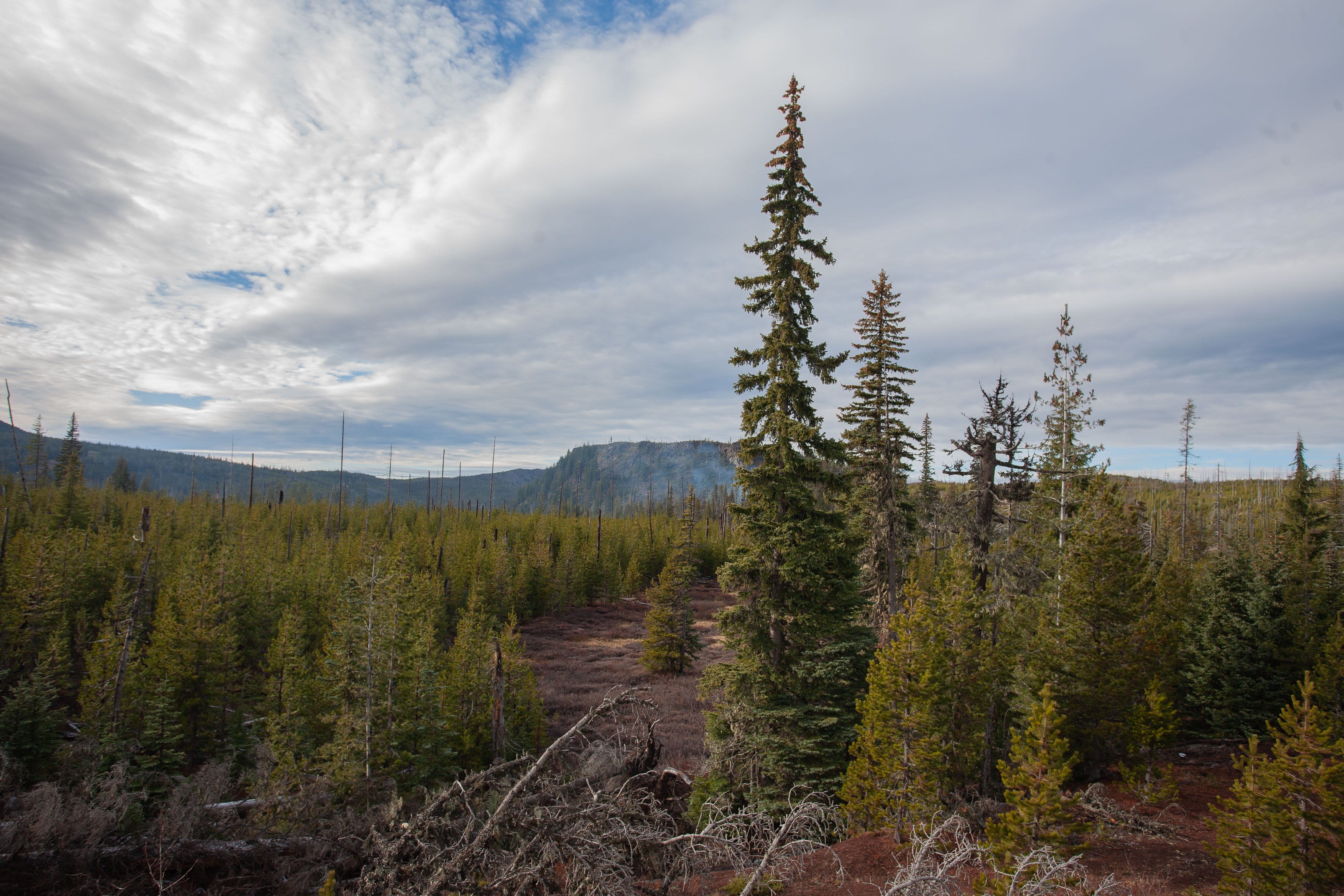
Maybe you have heard that it doesn’t snow in Oregon like it used to.
As of December 6th, 2025, the Willamette Valley basin’s snowpack level is at 11 percent of the average yearly level measured between 1991 and 2020, according to the USDA’s Natural Resources Conservation Service. This is part of a decades-long trend: more precipitation is falling as rain instead of snow.
Phil Mote, Director of the Climate Science Unit at OSU, has been looking at snow levels for years. “I started wondering 25 years ago, almost, if there was any evidence that climate warming was affecting mountain snowpack,” he says.
After looking through measurements dating back to the 1940s across the West, Mote says, “The climate signal was just really obvious.” Mote published his first snowpack study in 2003, and his most recent update in 2018 only advanced the trend: snowpack is declining.
Farmers, forests, and communities throughout Oregon depend on snow as a water source. Conversations with scientists and skiers reveal how snow data is gathered, how it will impact recreation and water throughout the Willamette Valley, and what to expect for future Oregon snow levels.
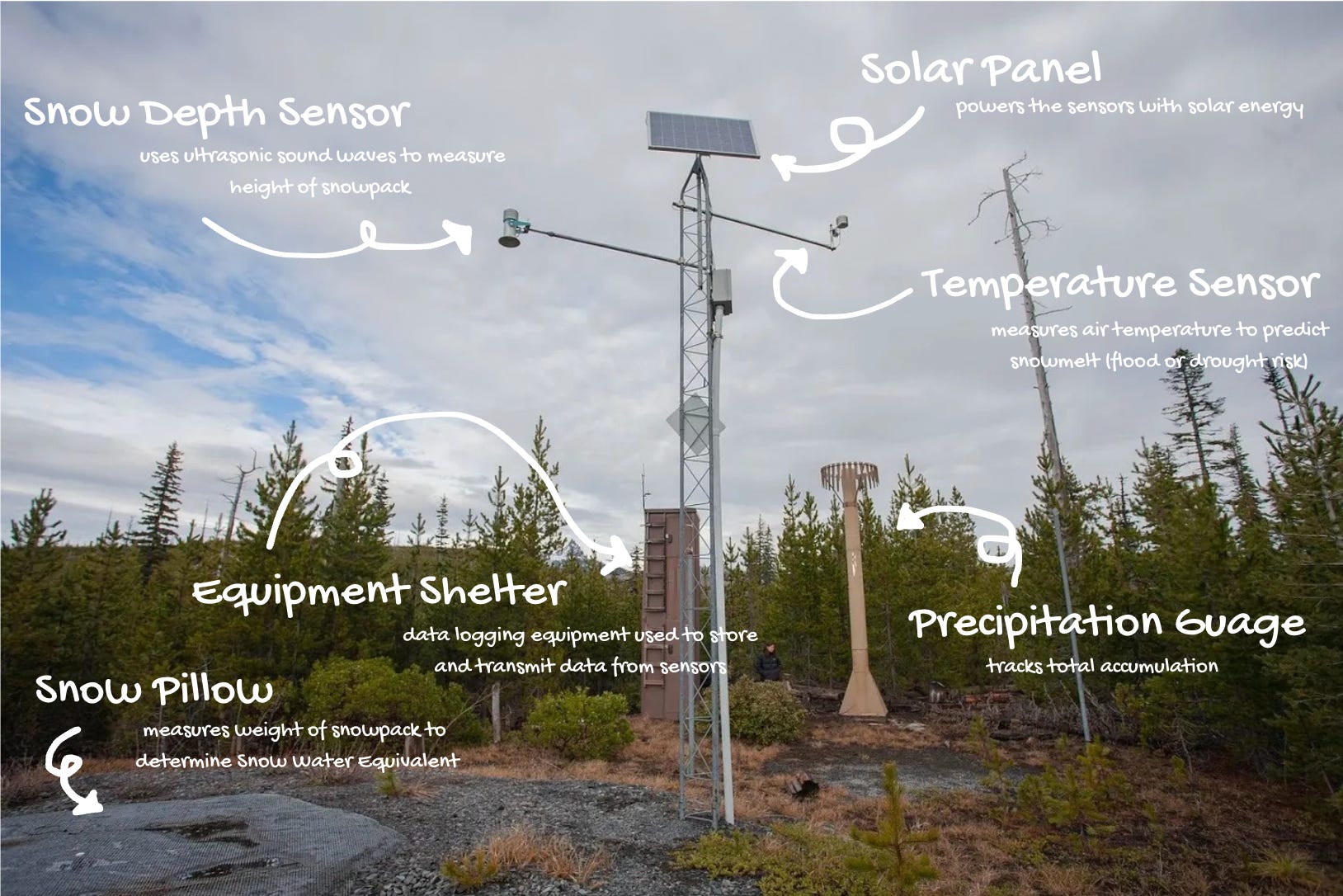
How do scientists know about this decline? SNOTELs.
SNOTELs (Snow-Telemetry) are snow measuring sites run by the USDA. They are automated and provide real-time data on snowpack and snow conditions. This data is then analyzed by hydrologists who produce water supply forecasts.
David Hill, a backcountry skier, snow scientist, and civil engineering professor at OSU, says they are essentially, “Just a big bathroom scale,” he continues, “And so over the season, as the snowpack builds up, that increases the pressure inside. That pressure essentially tells you the weight of the snowpack above it.” An artifact of sorts, these SNOTEL stations have been in use for over a century, holding the longest data records of mountain snowpack.
Countless industries rely on these consistent water supply and precipitation data reports: Farmers, reservoir operators, recreationalists, and natural disaster mitigation (flood, drought, avalanche), as they serve as an annual indicator of available water supply.

What does snow decline mean for skiing?
According to the 2025 Oregon Climate Assessment, created by the Oregon Climate Research Institute (OCCRI) and led by OSU professor Erica Fleishman, there will be “decreases of 65 percent or more in the Cascades and Eastern Cascades Slope and Foothills ecoregions and over 85 percent in western Oregon.”
Mote says some ski resorts in the West are resorting to man-made snow. Julie Polhemus, a ski patroller at the Willamette Pass Ski Resort, says they have some access to snow-making at the resort. She also says that the conglomeration of ski resorts could be a preemptive measure to counteract lost revenue from shorter ski seasons.
Polhemus says she often thinks about the way snow seasons are getting shorter, and if she, like many others, will eventually seek out a place with a more snow friendly climate. “Am I gonna be one of those people who ends up chasing the snow? I don’t know, maybe,” she says.
David Hill, in addition to his work with snow science at OSU, has been skiing in the Cascades for 15 years, says there is still snow to ski on, however, getting to it takes more work.
Hill also started an initiative called Community Snow Observations, which takes observational data from backcountry skiers to build better models of snow depth data. The idea sparked from his own time out in Oregon’s mountains. “Sometimes I mix my backcountry skiing and my snow science, and I make measurements when I’m out,” he says.
How will rivers and agriculture be impacted?
The environmental impacts of reduced snowfall include widespread drought. According to the Oregon Climate Assessment, “Lack of snow in winter increases the likelihood of hydrological or agricultural drought during the following spring and summer.”
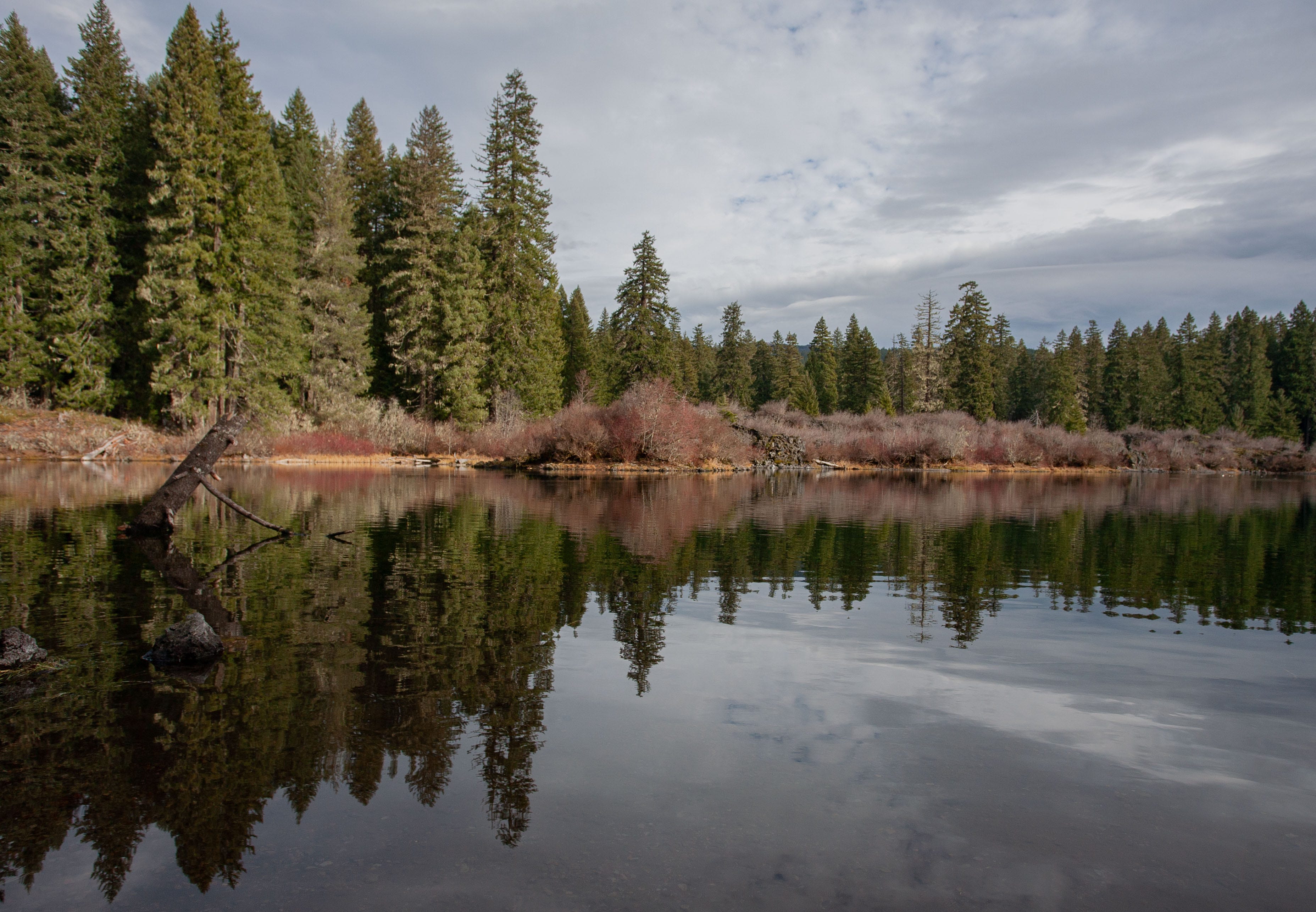
Mote recalled the snow season of 2015, one of the warmest on record. It led to water quality issues in the summer. “The Willamette was so low and warm that the city of Salem actually had trouble with its municipal water supply because there were harmful algal blooms in the river,” he says.
Mountain snowpack provides surface water supply and restores groundwater, which then supplies towns, cities, and agricultural development. Areas that get less precipitation throughout the year rely more heavily on snowpack to supply their water, as snowpacks act as a water storage. The Willamette Valley specifically tends to rely more on precipitation, as it is lower elevation. However, as you go further east, mountain ranges such as the Cascades are at a higher elevation and receive less precipitation. These areas rely heavily on snowpack runoffs.
Earlier snowmelt will lead to earlier flooding, even bringing floods in regions that have not previously experienced it and are not accustomed to the risks.
As for what people should prepare for, Fleishman says that snow precipitation decline means an increase in rainfall precipitation, creating the potential for flooding via a “rain on snow event.” This occurs when rain falls on snow, and “you get everything melting at once and you can get pretty substantial flooding.”

What about future snowfall?
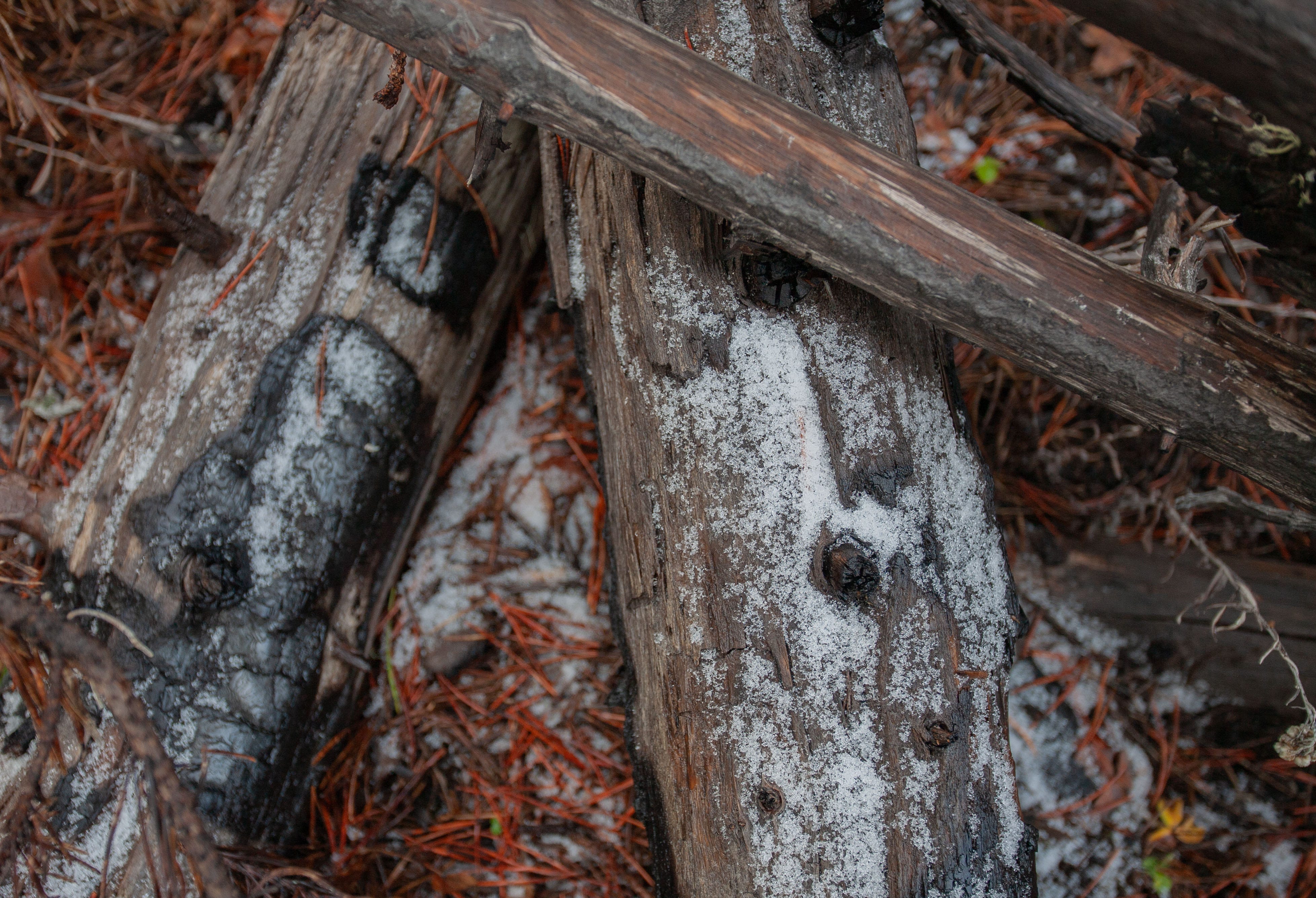
It’s not just studies of past winters that have shown a decline. The projections measure falling snowfall as well.
According to the 2025 Oregon Climate Assessment, the state is heading towards a 50% decline in snowfall by the year 2100.
Matt Warbritton, a Supervisory Hydrologist for the USDA Snow Survey Program, explains why temperature matters to snow precipitation. He explains that “small shifts in temperature that we experience here in the Northwest can lead to quite a dramatic change in our snowpack because it sits so close to the melting temperature most of the year.”
Fleishman says nearly every industry will be impacted by snow decline.
When asked who the stakeholders of reduced snowfall are, she says, “Everyone. Everyone needs water to live. Many people need water for aspects of their livelihoods in addition to their personal health, their personal values. Everyone has a stake in water.”
