
Oregon’s Original Ecosystem Engineers
Beavers, honored as the state animal, managed waterways before human disruption.


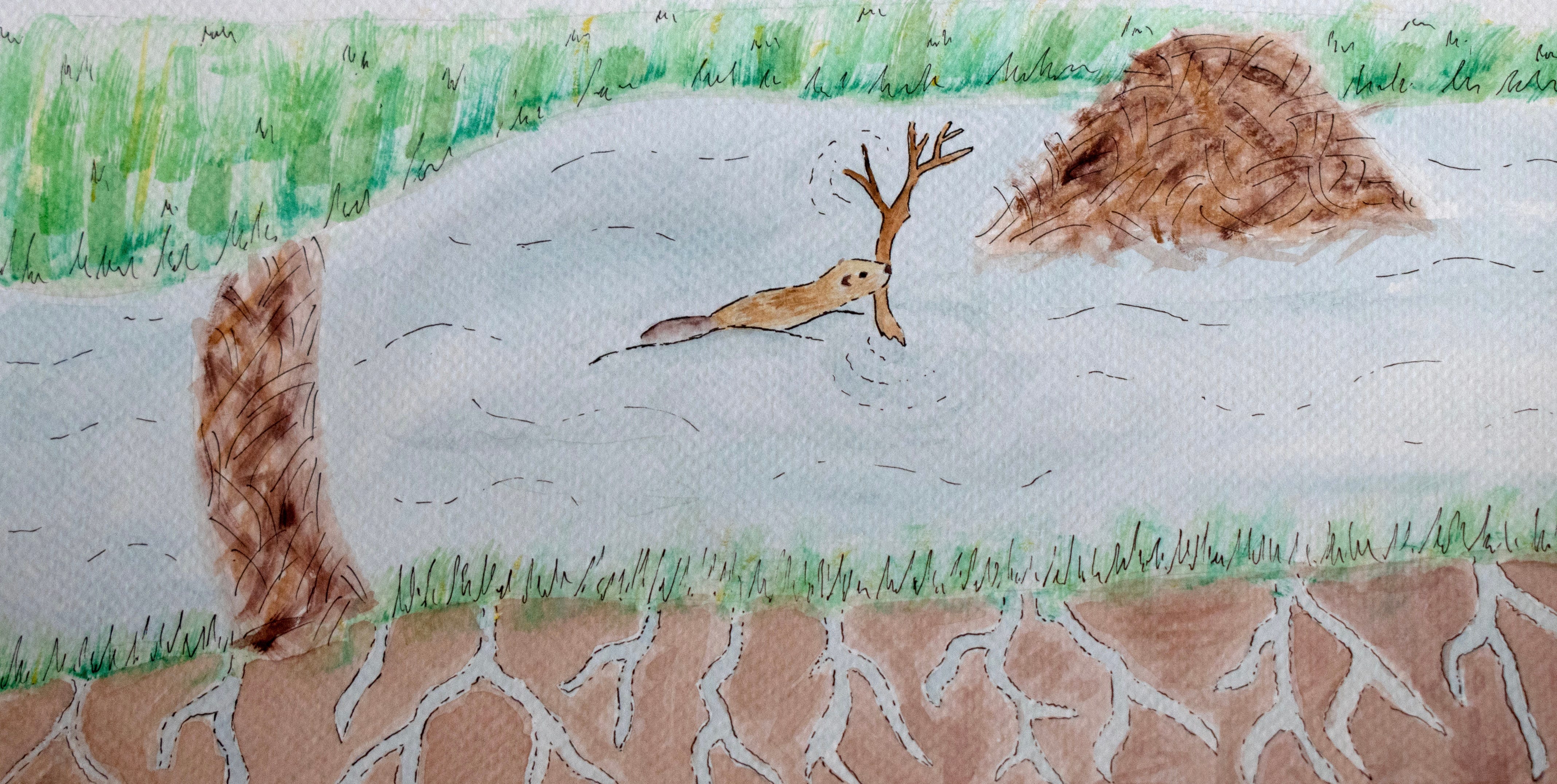
Imagine a scene: mist settles on the Willamette River as a beaver chews a cottonwood trunk. The muddy bank flourishes with diverse vegetation thanks to the beaver’s ecological engineering. The river, spread miles wide into braided channels, twists and turns against each log and dam. Ponds near the edges are teeming with small fish that call this habitat home.
Two hundred years ago, this was reality. The Willamette River was a self-maintained hub of biodiversity maintained by beavers. However, by the mid-19th century, beaver poaching, fueled by the immense fur trade in North America, and the human settlement that followed dismantled the intricate riparian topography.
“Because human infrastructure has pushed that river into a single channel, there are fewer of those side channels, and fewer of those flood plains that the river actually interacts with. And as a result, beavers are not able to inhabit them in a way that they would have 100 years ago,” said Tyrell Styhl, the ecological projects coordinator for the South Santiam Watershed Council.
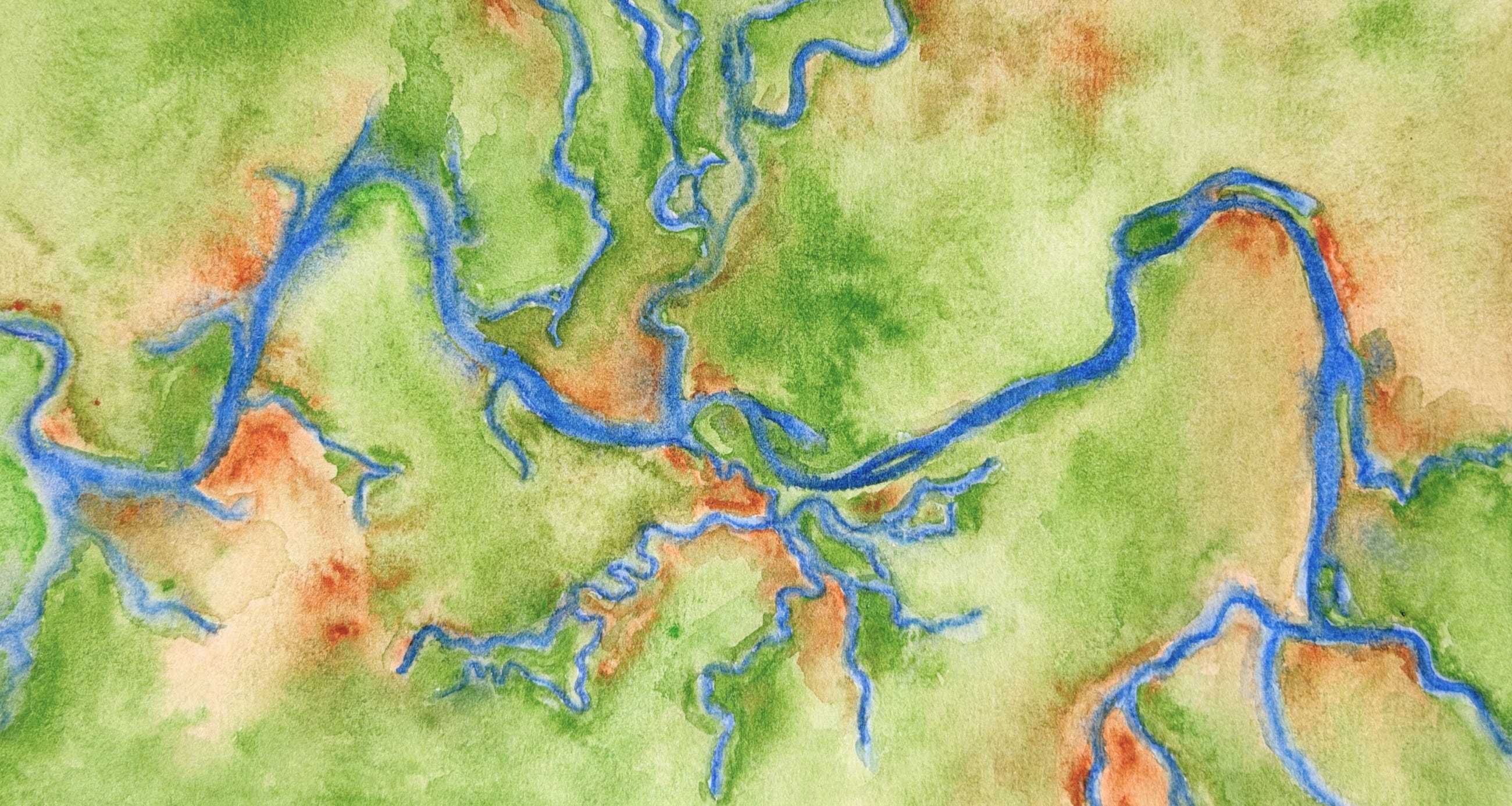
With fewer floodplains and side channels, water rushes through at high velocities, stifling the slow meander through wetlands, which was an essential condition for beaver dam building.
Today, beavers live along the Willamette River in dens, not dams. The single channel is far too intense for dams to withstand. So, dams are relegated to small streams uphill that feed into the river.
The Fur Trade
Oregon’s “Fur Desert” policy, introduced in the 19th century, introduced organized trapping and harvesting of beavers, which exterminated approximately 35,000 beavers in the Snake Country basin alone over the span of two decades.
Enforced by the Hudson Bay Company, this policy intended to create a beaverless threshold that deterred settlers from coming West and destroying the company’s fur-trade revenue.
Beaver fur is incredibly dense and water-resistant, making it a desirable material for warm, dry clothing. Felted hats made from the undercoat became a fashion trend across North America in the nineteenth century. Policies promoted the extermination of fur-bearing species to deter western settlement by those who hoped to strike it rich on this resource.
Beaver’s Ecology
“They create a mosaic on the landscape,” said Styhl.
Beaver ponds, created from dams that restrict water flow, provide a unique habitat that would not otherwise occur.
These pools are beneficial for groundwater that is resilient through Oregon’s dry season and help manage wildfires.
Woody vegetation on banks, necessary for stability and shade, rely on beavers to prosper. Natural disruption from harvesting creates the conditions for reproduction and flourishing.
“They are a very important keystone species,” said JP Zagarola, a MWBP founder, who explained how beavers’ wetland management promotes salmon and steelhead populations, improves water quality, elevates the water table, and even creates wildfire breaks.
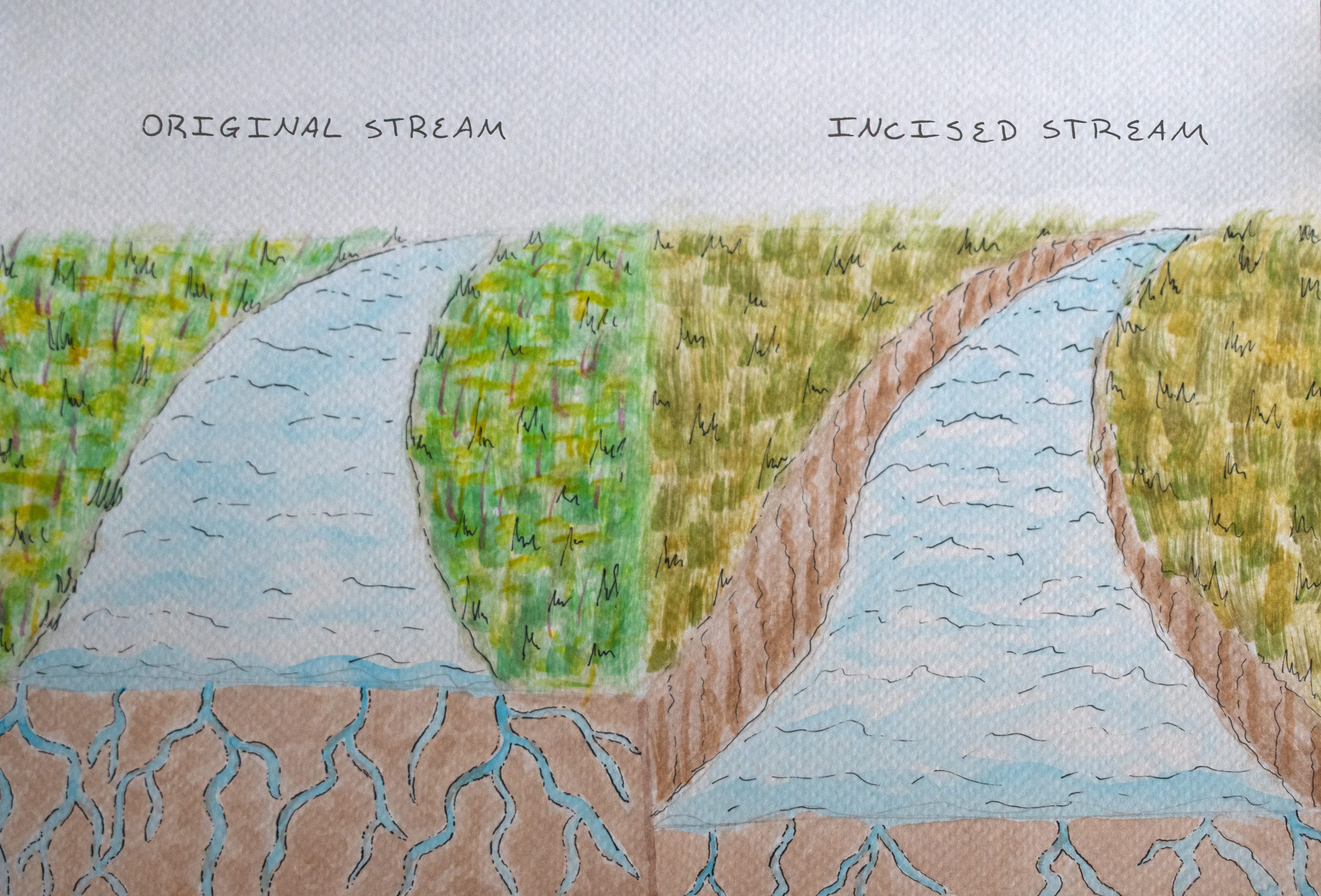
Widespread removal of beavers—a keystone species—combined with human activity near rivers and the loss of the natural landscapers, lead to erosion, lowering the riverbed. When rivers lose their floodplains, they cut down like a shovel digging a deep trench, resulting in an incised stream: fast, deep, and disconnected from the land it once nourished.
Shifting from the myriad of streams and flood plains to an incised state lacking woody vegetation and beaver dams, the river became a strong current that erodes banks and carves into the riverbed.
While dams trapped sediment, the rivers now flow freely with this debris, which carves riverbeds deeper into the ground. Stream velocity is the main challenge for beaver activity, according to Zagarola.
Human activity has caused many streams and rivers to converge into single channels, whereas historically they were smaller, braided channels stretching across the valley. These larger channels are wider and faster, making it impossible for beavers to dam them. In these conditions, they build bank dens rather than their traditional lodges.
Cooperating With Beavers
“The only animal that alters its landscape as much as beavers do are humans,” said Styhl.
When management of the Willamette River shifted from beavers to humans, a drastic change occurred. Cities and agriculture developed along the river, a valuable water source that fueled settler livelihoods.
As people recognize environmental damage caused by this development, they look toward the original ecosystem engineers for solutions. Beavers do what restorationists try to do, but for free, according to Zagarola.
The Mid-Willamette Beaver Partnership is an alliance of valley watershed councils, native tribes, and environmental groups that facilitates coexistence between beavers and humans. Their goal isn’t just to protect beavers, but to work with them.
Habitat restoration efforts focus on plans that balance landowner interests and beaver autonomy. Pond levelers are a common tool installed in beaver ponds to prevent water levels from rising above the dam and flooding property.

BDAs Accelerate Biodiversity
In areas where beavers can’t return, humans have created riparian-inspired solutions. Beaver Dam Analogs (BDAs) are low-tech, process-based restoration projects made from natural materials woven into streambeds. They mimic beaver activity by building dams in streams where they historically managed the banks and water levels.
In various studies, including some done by Dr. Matthew Orr at OSU Cascades, BDAs have been shown to supplement groundwater and create conditions that allow woody riparian vegetation to thrive.
BDAs aren’t just ecological tools but also community-building ones, strengthening the relationship between humans and beavers. “BDAs are really great because you can get a lot of people involved in installing them,” said Zagarola. “They don’t cost a lot of money; you can get volunteers and the community engaged doing the work, which I think is critical.”
BDAs are also a method for slowing fast-moving streams, helping recreate conditions ideal for riparian dam-building. “A lot of work that we do to encourage dam building is just trying to slow down that stream velocity…we see a spur of activity of dam building once that stream velocity gets slowed down,”said Zagarola.
While BDA’s can provide certain benefits and help restore ecosystems, they are not a one-size-fits-all solution. Dr. Orr’s experiments found limitations based on flow in various locations, as some BDAs sustained damage in high flows, which then can’t be repaired until the stream is back to a low flow. Depending on the timing of the damage, this could completely nullify the sediment retention benefits of a BDA. This means that choosing the right location is critical, as well as monitoring each location to identify when maintenance is needed.
Dr. Orr chose to run his BDA research on the south fork of the Crooked River, because, “all of its historic streamside forest (aspen, cottonwood, alder, willow) was destroyed by European settlers. So we wanted to see if the structures (the BDAs) would trap sediment, which helps the stream to reconnect with its floodplain, and raise water levels to help restored tree plantings to survive and grow. We found that they did produce growth benefits, but that they were labor-intensive to maintain. In other words, beaver dam analogs aren’t really good analogs, because beaver dams get maintained constantly by beavers, but humans aren’t very diligent about maintaining BDAs.”
If beavers adopt a BDA, that maintenance will be taken care of and they are much more effective than if the BDA relies solely on human maintenance. “I see BDAs as a sort of temporary solution with the intent of, if in the right situation, having beavers kind of move in and manage the project for you,” said Zagarola.
In order for beavers to adopt a BDA, the habitat around it needs to be hospitable for them. In Dr. Orr’s study, this took quite a long time. The BDAs had to start working to bring the habitat back to a livable state for beavers, before they could take over the work of maintaining them.
“In our case, as the woody vegetation being planted for restoration began to grow, beavers moved into the area and started maintaining the structures with the new wood available. But it took about 7 years for that to start happening.”
The Road Ahead: Challenges and Adaptive Management
One way to reduce the maintenance toll of BDA’s could be to use stronger, man-made materials to supplement the natural wood and vegetation that is common now. There are limitations and biases within the communities and organizations running BDA projects that prioritize natural materials. The department of fish and wildlife, for example, has concerns that unnatural building materials could cause problems for fish populations.
Dr. Orr would like to see some of these biases change in the future to allow greater diversity in materials. “The truth is, we have created stream conditions that are unnatural, and therefore, in some cases, it may be appropriate to use unnatural materials to boost it back to its former state and working condition. Perhaps you could think of this as something like a prosthesis: not natural, but helps the person to function normally.”
BDA’s can be implemented along with other measures to help habitats recover from human interference. Human civilization isn’t leaving the valley any time soon, so we asked Dr. Orr what a successful restoration looks like, short of a full return to pre-human conditions.
“In some cases, it is possible to restore the channel fully. That is happening on Deschutes Land Trust properties on Whychus Creek. The land has exclusively been turned over to restoration. That has allowed them to create branching channels that extend from one side of the river valley to the other.”
In other cases, where human infrastructure inhibits fully returning an ecosystem to its original state, Dr. Orr says that, “restoring the riparian forest to a point where it can support active and historic beaver densities would be a good target. Ideally, there should also be enough floodplain for the stream to overtop its banks in high flow events and return and store moisture in the adjacent landscape.”
In some locations where the habitat was preserved or has already been restored, humans can reintroduce beavers to the area. Reintroduction provides promising results as dams trap sediment, reducing river incision, and vegetation flourishes once again when beavers return to the landscape.
i love this article dearly